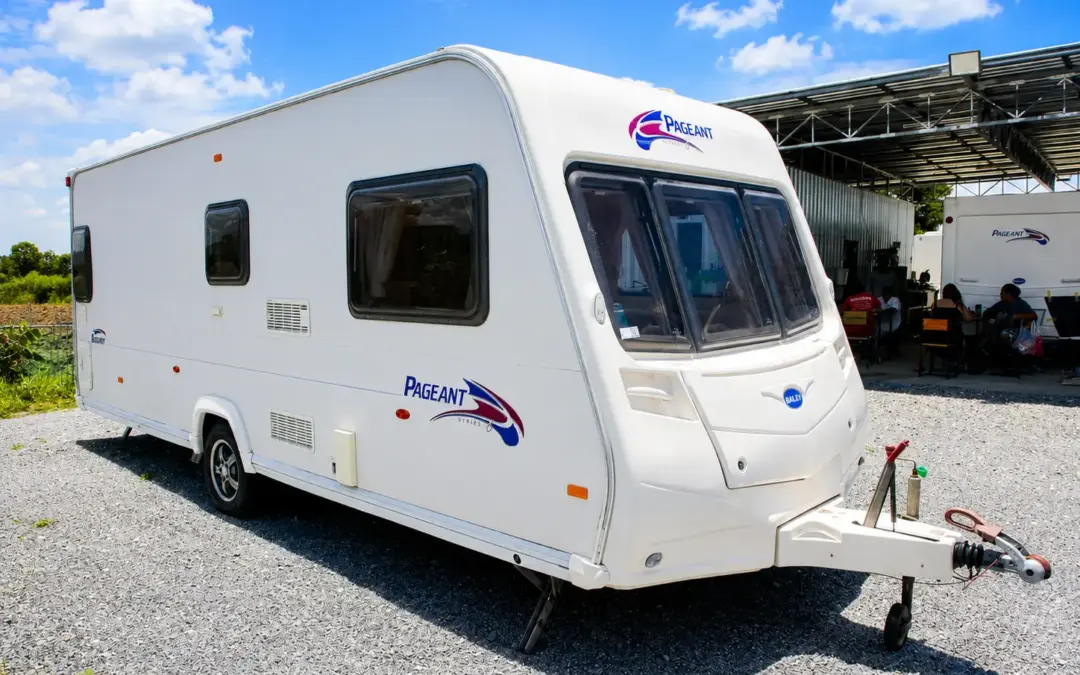
Bailey vs Coachman: Which Touring Caravan Brand Is Right for You in Thailand?
Two of Britain’s most respected caravan manufacturers, one big decision for buyers across Thailand and Southeast Asia. We compare Bailey and Coachman on build quality, weight, climate suitability, and long-term ownership costs.
In this guide:
- Why this comparison matters for Thai buyers
- A quick history of both brands
- Build quality and construction
- Interior design and layouts
- Weight and towing in Thailand
- Handling heat and humidity
- Popular models compared
- Pricing and value in Thai Baht
- Resale value and parts availability
- Warranty and after-sales support
- Importing and preparing either brand for Thai roads
- Which brand suits which buyer
- Frequently asked questions
Why This Comparison Matters for Thai Buyers
Caravanning is still a young hobby in Thailand compared to the UK or Australia, which means most buyers researching their first tourer are doing so with very little local reference material. Search results are dominated by British forums written for British roads, British campsites, and British weather — none of which map cleanly onto a driving holiday from Bangkok to Khao Yai, or a long weekend parked up near Hua Hin.
Bailey and Coachman are two of the names that come up again and again once you start looking seriously at imported touring caravans, and for good reason. Both are established British manufacturers with decades of engineering behind them, both build caravans that regularly turn up in the Asia-Pacific secondhand and import market, and both have a loyal following that will defend their choice fiercely in any online forum. That loyalty is useful context, but it isn’t the same as an honest comparison of what actually matters once a caravan is sitting in Chonburi in April.
This guide walks through the real differences — construction methods, weight, interior philosophy, and how each brand tends to cope with a tropical climate — so you can make a decision based on how the caravan will actually perform here, not just on brand reputation built for a different market.
A Quick History of Both Brands
Bailey Caravans
Bailey has been building caravans in Bristol since the 1930s, and it remains one of the largest independent caravan manufacturers in the UK. The brand built its modern reputation on the Alu-Tech body construction system, introduced in the mid-2000s, which moved away from traditional timber framing toward a bonded, aluminium-framed composite structure designed to resist damp ingress — historically the single biggest cause of caravan write-offs in humid climates.
Bailey’s range spans entry-level tourers through to more premium lines, and the company has leaned heavily into engineering-led marketing: chassis protection, damp-resistant construction, and long structural warranties are central to how the brand positions itself.
Coachman Caravans
Coachman is an older name still, tracing its roots back to 1968, and has built its identity around a more traditional, craftsmanship-first approach to caravan building. Where Bailey talks about aluminium and bonding processes, Coachman has historically emphasised timeless interior design, quality soft furnishings, and a body construction method (GRP-skinned, timber-framed in older ranges, moving toward more composite construction in newer models) aimed at a smoother, more insulated ride.
Coachman caravans have traditionally sat slightly higher up the market in perceived finish and interior polish, appealing to buyers who want their caravan to feel more like a compact holiday home than a piece of touring equipment.
Build Quality and Construction
This is the question we get asked most often by buyers here, and understandably so — a caravan in Thailand deals with a very different set of stresses than one in Yorkshire. Monsoon humidity, intense UV exposure, and long periods of storage between trips all put pressure on the body shell in ways that a UK-focused review simply won’t cover.
Bailey’s Alu-Tech system bonds an aluminium skin to a composite frame rather than screwing panels to timber, which removes most of the screw-hole entry points that traditionally let moisture into a caravan’s structure over time. For a climate like Thailand’s, where humidity sits high for months at a stretch, this is a genuinely relevant advantage — timber-framed caravans that have sat in damp storage for years are far more prone to the kind of hidden rot that only shows up once you start removing interior panels.
Coachman’s construction has modernised significantly over the last decade, with most current-generation models moving to a fully bonded, timber-free body on their higher-tier ranges, closely matching what Bailey offers structurally. Older secondhand Coachman models — which make up a large share of what actually reaches the Asian import market — are more likely to use the older timber-framed method, so the manufacturing year matters more with Coachman than it does with Bailey when you’re buying used.
In practical terms: if you’re buying a newer model of either brand, structural damp resistance is broadly comparable. If you’re buying an older secondhand unit, checking the specific construction year and requesting a damp meter reading before purchase matters more than the badge on the front.
Interior Design and Layouts
This is where the two brands feel most different to actually live in. Bailey’s interiors tend toward a lighter, more contemporary look — pale woodgrain finishes, simpler upholstery patterns, and layouts that favour practicality: larger fixed beds, more overhead lockers, and washrooms designed for efficient use of space rather than maximum comfort.
Coachman’s interiors lean traditional and, in most buyers’ eyes, slightly more premium — richer fabric choices, more decorative trim, softer lighting design, and a general sense that more attention has gone into how the space feels rather than purely how it functions. For buyers planning to use their caravan as a semi-permanent weekend retreat rather than purely for touring, this difference in atmosphere is often the deciding factor.
Layout-wise, both brands offer the full spread you’d expect — French door islands, fixed single and double beds, dinette conversions, and rear washroom configurations — so layout preference usually comes down to the specific model rather than the brand as a whole.
| Category | Bailey | Coachman |
|---|---|---|
| Interior style | Light, contemporary, practical | Traditional, warmer tones, premium feel |
| Body construction (current models) | Alu-Tech bonded aluminium/composite | Bonded composite (varies by age) |
| Damp resistance (older secondhand units) | Generally strong from mid-2000s onward | Depends heavily on manufacture year |
| Typical unladen weight | Slightly lighter on comparable layouts | Slightly heavier due to insulation and fit-out |
| Perceived market position | Engineering-led, mid-market | Design-led, mid-to-upper market |
Weight and Towing in Thailand
Weight is the single most overlooked factor when Thai buyers choose between UK caravan brands, and it deserves more attention than it usually gets. Most European tourers were designed with UK B+E licence limits and typical European tow vehicles in mind — assumptions that don’t always transfer cleanly to the pickup trucks and SUVs most commonly used for towing here.
Bailey’s aluminium-framed construction generally comes in a little lighter than a comparably sized Coachman, model for model, largely because the bonding process removes some of the structural bulk that timber framing requires. This isn’t a dramatic difference — usually somewhere in the range of 50 to 150kg on similarly sized units — but on the margins, it can matter. If you’re towing with a mid-size pickup and want a healthy safety buffer below its braked towing capacity, that gap is worth factoring in.
Coachman’s slightly heavier build comes with a trade-off worth mentioning: the additional weight is generally added in insulation and fit-out quality rather than excess bulk, which is part of why the ride often feels more settled and less prone to sway at speed. For buyers primarily driving flat, well-maintained highway routes, this stability can outweigh the lighter towing figure on paper.
Handling Heat and Humidity
Neither brand was designed with Southeast Asia in mind, so this section is really about which construction and material choices happen to translate well, rather than which brand “wins” for tropical use.
Bailey’s Alu-Tech shell handles prolonged heat exposure well structurally, since the bonded composite panels are less prone to warping or delaminating than older timber-framed alternatives. The main consideration is UV exposure on external GRP and decal surfaces, which fades over time regardless of brand — a covered parking spot or breathable caravan cover makes a bigger difference here than which manufacturer built the caravan.
Coachman’s heavier insulation package, originally specified for UK winters, has an unexpected side benefit in Thailand: it also slows heat transfer into the cabin during the day, meaning the interior can stay noticeably cooler for longer before air conditioning or ventilation kicks in, compared to a lighter-insulated unit left in direct sun.
For humidity specifically — the bigger long-term risk to any caravan stored here — the real differentiator isn’t the brand but the individual unit’s damp history, ventilation design, and how well it’s been maintained during storage. A well-cared-for older Coachman will outlast a neglected newer Bailey, and vice versa. This is one area where asking for a full damp survey before purchase matters more than brand loyalty.
Popular Models Compared
Two models that regularly come up in our own listings, and that make a useful head-to-head, are the Bailey Pegasus 462 and the Coachman Pastiche 460-2. Both are twin-axle, mid-size tourers aimed at couples or small families, which makes them a fair like-for-like comparison rather than pitting a budget model against a flagship.
Bailey Pegasus 462
The Pegasus range represents Bailey’s more design-conscious mid-tier line, sitting above the entry-level ranges while staying below the brand’s flagship models. The 462 layout typically features a rear washroom, a compact but well-organised kitchen, and a lounge area that converts to additional sleeping space — a practical, no-nonsense layout aimed at buyers who tour often and want minimal fuss.
Coachman Pastiche 460-2
The Pastiche range is one of Coachman’s more traditionally styled lines, and the 460-2 layout leans into that identity with warmer interior tones, a more decorative finish on cabinetry, and a lounge designed as much for relaxing in situ as for touring between destinations. It tends to appeal to buyers planning longer stays in one location rather than frequent short hops.
Neither model is objectively “better” — the Pegasus 462 suits buyers who prioritise practicality and slightly easier towing, while the Pastiche 460-2 suits buyers who want their caravan to double as a comfortable static retreat between trips.
Pricing and Value in Thai Baht
Because both brands are imported rather than locally manufactured, pricing in Thailand reflects UK secondhand or ex-demonstrator value plus shipping, import duty, and local preparation costs — meaning the gap between Bailey and Coachman pricing here tends to track fairly closely with their relative pricing in the UK market.
As a general pattern, comparable-age, comparable-condition Bailey models are often priced slightly below equivalent Coachman models, reflecting Coachman’s traditional positioning as the more premium-finished brand. That said, individual unit condition, age, and specification (fitted air conditioning, solar setup, awning included, etc.) usually move the price more than the brand name does. We’d always recommend comparing specific units on their own merits — layout, condition report, and included extras — rather than assuming one brand is a “better deal” across the board.
Resale Value and Parts Availability
This is a genuinely important consideration in a smaller regional market like Thailand, where the secondhand buyer pool is much shallower than in the UK. Both Bailey and Coachman have reasonable brand recognition among the growing community of Thai and expat caravanners, which helps resale liquidity compared to lesser-known brands.
Parts availability is the bigger practical difference. Bailey’s larger production volumes and broader UK dealer network mean that structural and mechanical spares — hitch components, chassis parts, window seals — are generally easier and cheaper to source and ship. Coachman parts are available but can involve slightly longer lead times for less common components, simply due to smaller production runs on certain ranges.
For buyers who plan to handle most maintenance themselves and want the shortest possible wait on replacement parts, this tips modestly in Bailey’s favour. For buyers who work with a caravan servicing specialist and plan ahead for parts orders, the difference matters less day to day.
Warranty and After-Sales Support
Warranty terms matter more once a caravan has crossed an ocean, because the practical value of a UK-based warranty starts to depend heavily on whether local dealers or independent specialists are willing to honour or replicate that cover once the unit is registered in Thailand.
Bailey typically backs its Alu-Tech construction with an extended structural warranty against water ingress, often running well beyond the standard mechanical warranty period, reflecting how central damp resistance is to the brand’s engineering pitch. In the UK this can run to a decade or more on body integrity, though buyers importing secondhand units should confirm in writing whether any of that original cover transfers, since most manufacturer warranties are tied to the original registered keeper and UK-based service history.
Coachman’s warranty structure has historically been more conventional — a shorter, more standard multi-year cover on build and mechanical components, with the emphasis placed on the quality of construction itself rather than an extended damp-specific promise. As with Bailey, any remaining UK warranty rarely has practical force once a caravan is several years old and outside its home market, so buyers here are usually working with the local dealer’s own guarantee rather than the manufacturer’s original terms regardless of brand.
In practice, this means the more useful question for a secondhand import isn’t “what warranty did it originally carry?” but “what warranty or guarantee does the seller in Thailand offer on this specific unit, and what does it actually cover?” Ask for this in writing before completing a purchase, and treat any verbal reassurance about “the brand’s reputation for reliability” as a starting point for research, not a substitute for a written guarantee.
Importing and Preparing Either Brand for Thai Roads
Whichever brand you choose, a caravan built for the UK market needs some attention before it’s genuinely ready for regular use on Thai roads and in Thai campsites, and the checklist is largely the same regardless of whether the badge says Bailey or Coachman.
Electrical and Gas Compatibility
UK caravans are wired for 230V at 50Hz, which aligns reasonably well with Thailand’s 220V/50Hz supply, so mains electrics generally need only minor adaptor work rather than a full rewire. Gas systems are a different matter — UK caravans are typically set up for propane with UK-pattern regulators, and swapping to LPG cylinders and fittings commonly available in Thailand is one of the most common preparation jobs on any imported unit, Bailey or Coachman alike.
Tyres and Suspension
Caravans that have spent years on UK roads, or sat in storage through several UK winters, often benefit from a full tyre replacement before regular use in a hotter climate, since tyre compounds age differently under prolonged heat exposure than they do in cooler conditions. This applies equally to both brands and is worth budgeting for regardless of which caravan you choose.
Air Conditioning and Ventilation
Very few UK-specification caravans ship with air conditioning as standard, since it’s rarely needed at home. Retrofitting a roof-mounted air conditioning unit is one of the most requested modifications we handle for both Bailey and Coachman owners here, and it’s worth factoring into your budget from the outset rather than treating it as an optional extra.
Registration and Local Compliance
Import duty, local registration, and roadworthiness requirements apply the same way regardless of brand — the paperwork burden of bringing in a Bailey is no lighter than bringing in a Coachman. Working with an importer or dealer who has handled the process before, for either brand, will save considerable time compared to navigating it independently.
Which Brand Suits Which Buyer
- Choose Bailey if: you tour frequently, want a lighter unit that’s easier to match to a mid-size pickup or SUV, prioritise structural damp resistance in an older secondhand unit, and want a slightly easier time sourcing spare parts.
- Choose Coachman if: you want a caravan that feels more like a home away from home, plan to spend longer stretches parked in one spot rather than touring constantly, and value interior finish and ride comfort over the lightest possible towing weight.
- Either brand works well if: you’re buying a well-documented, well-maintained unit with a clean damp history — at that point, layout and condition matter far more than which name is on the front.
It’s also worth thinking about how your caravan will actually be used month to month, not just on the ideal touring weekend. Families who tow occasionally on school holidays tend to value the lighter, simpler layouts Bailey favours, since less frequent towing makes weight margin and ease of hitching up more important than long-term interior polish. Retirees and long-stay travellers who might leave a caravan set up at a single site for weeks at a time often lean toward Coachman, where the extra attention to interior comfort pays off every day rather than only on the road.
First-time buyers in either camp are well served by prioritising condition and documentation over brand debate. A five-year-old caravan from either manufacturer, with a clean damp survey, full service history, and evidence of careful storage, will almost always outperform a similarly priced unit from the “better” brand that’s been neglected. Brand is a reasonable starting filter for narrowing a search — it shouldn’t be the final word once you’re standing in front of an actual caravan with a damp meter in hand.
See Current Bailey and Coachman Listings
Every caravan we list includes full condition details, layout photos, and towing specifications in both kg and Thai Baht pricing.
Frequently Asked Questions
Is Bailey or Coachman better for towing with a pickup truck?
Bailey models are generally a little lighter model-for-model due to their aluminium-framed construction, which can offer more margin below a pickup’s braked towing capacity. Always check the specific caravan’s MTPLM against your vehicle’s rated capacity rather than relying on brand reputation alone.
Which brand handles Thailand’s humidity better?
Newer models from both brands use bonded, largely timber-free construction that resists damp well. For older secondhand units, the manufacture year and damp survey history matter more than the brand itself — request a current damp meter reading before buying either.
Are Coachman caravans more expensive than Bailey?
Comparable-age Coachman units are often priced slightly higher than equivalent Bailey models, reflecting Coachman’s traditional premium interior positioning, though individual condition and included extras usually have a bigger impact on price than brand alone.
Which brand is easier to get spare parts for in Thailand?
Bailey’s larger production volume generally means shorter lead times on structural and mechanical spares. Coachman parts are available but can take longer to source for less common components.
Do either of these brands make caravans specifically designed for tropical climates?
No — both Bailey and Coachman design primarily for the UK and European market. Their suitability for Thailand comes down to construction method and maintenance history rather than any tropical-specific engineering.
Does a UK warranty still apply once a caravan is imported to Thailand?
Rarely in practice. Manufacturer warranties are generally tied to the original UK-registered keeper and UK service history, so most imported units are covered by the local dealer’s own guarantee rather than the original Bailey or Coachman warranty. Always ask for this in writing before purchase.
What modifications does a Bailey or Coachman need before regular use in Thailand?
The most common jobs are switching gas fittings to the local LPG standard, replacing tyres that have aged in storage, and retrofitting air conditioning, since few UK-spec units come with it as standard. These apply equally to both brands.
Can I tow a Bailey or Coachman with a typical Thai pickup truck?
In many cases yes, but it depends entirely on the specific caravan’s MTPLM against your pickup’s braked towing capacity — this varies by model and year for both brands, so always check the individual unit’s figures rather than assuming based on brand.